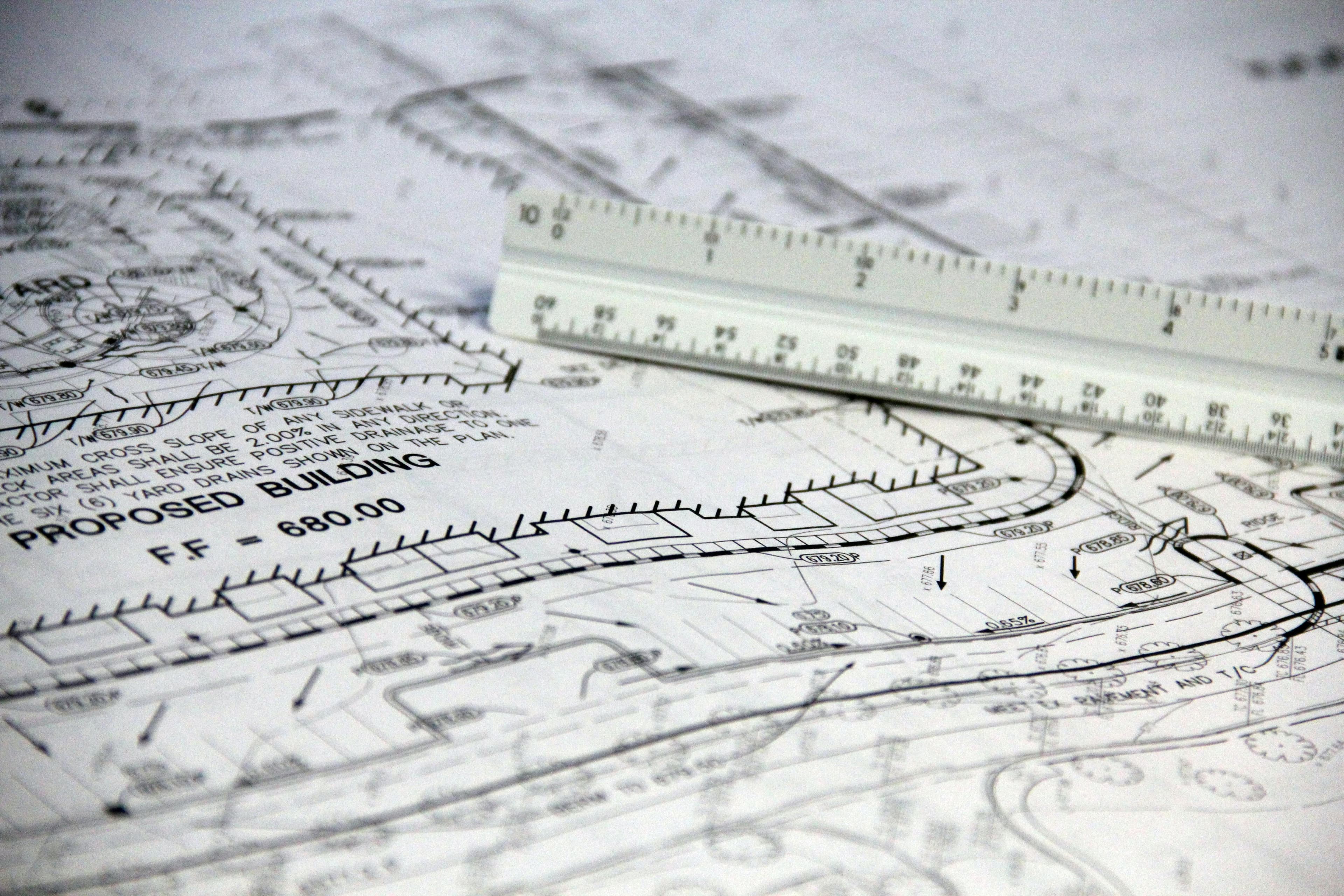
# What Is Land Entitlement?
Land entitlement is the legal process of obtaining all the government approvals needed to develop or redevelop a property.[1][2] That includes zoning approvals, development permits, environmental clearances, site plan sign-offs, utility commitments, and anything else a jurisdiction requires before you can pull a building permit and break ground.
Entitlements can be better understood as a stack of approvals from multiple agencies, with each one having its own requirements, timeline, and potential to stop your project.[3] The entitlement process can take anywhere from three months to several years depending on the jurisdiction and project complexity.[4][5]
For developers, this is where the real work begins. Identifying a promising site is only the first step. Entitling it—proving to a city or county that your project complies with their rules or convincing them to change those rules—is what turns dirt into a buildable asset. And because entitlements are often discretionary, meaning they are approved only at the judgment of a planning commission or city council, the outcome is never guaranteed.[6] That uncertainty is what makes entitlement both one of the riskiest and most valuable phases of real estate development.
# What You Are Actually Obtaining
 Environmental Reviews like California's CEQA are a required part of the entitlements process in some states. Source: State of California Resources Agency
The word "entitlement" gets used as a catch-all, but it covers a range of distinct approvals. Not every project will require all of them, but most development applications will touch several.[3][7]
Zoning approval is the starting point. If the property's current zoning does not permit your intended use, you will need a rezoning, a variance, or a conditional use permit before anything else can proceed. This is a legislative or quasi-judicial action that requires public hearings and a vote.[1][2] If you are not familiar with how zoning works, our guide to zoning laws covers the basics.
Site plan approval is the jurisdiction's review of how your project sits on the land—building placement, parking layout, landscaping, lighting, stormwater management, and architectural elevations. The planning department checks your plans against the zoning code's dimensional and design requirements.[3][8]
Environmental review may be required depending on the project's scale and location. In California, the California Environmental Quality Act (CEQA) requires agencies to assess and disclose the environmental impacts of proposed projects, including effects on air quality, water, traffic, noise, and wildlife.[9] At the federal level, the National Environmental Policy Act (NEPA) applies to projects that receive federal funding or require federal permits.[10] Many other states have their own environmental review statutes as well.
Subdivision or platting approval is necessary when a larger parcel is being divided into individual lots for sale or development. The subdivision process has its own set of engineering, infrastructure, and design standards.[2]
Utility approvals cover water, sewer, electric, gas, and telecommunications. If utilities are not already at the site, you will need approval and potentially easements or land dedications to bring them in.[1][3]
Building permits come at the end—after the entitlements are secured. The building department reviews your construction documents for compliance with building codes, fire codes, and accessibility standards. This is the final approval before construction can start.[8]
The key thing to understand is that these approvals are sequential and interdependent. You cannot get a building permit without site plan approval. You cannot get site plan approval if the zoning is wrong. And if an environmental review turns up a problem, it can send you back several steps. The entitlement process is a chain, and a break at any link stops the whole thing.
# How the Entitlement Process Works Step by Step
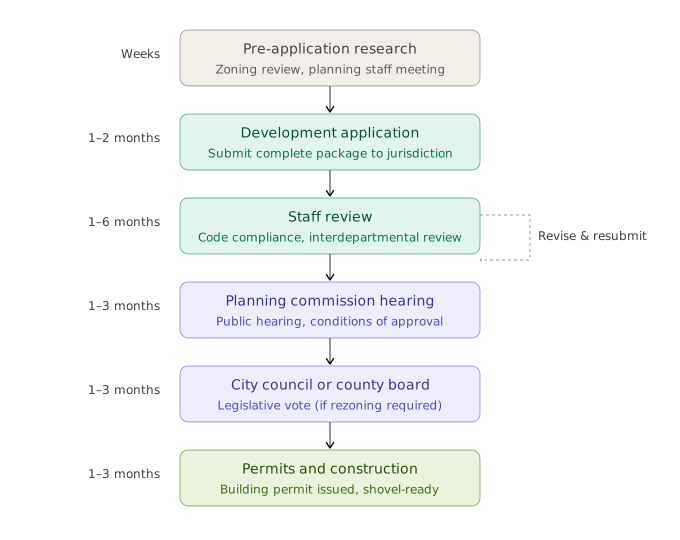 While each jurisdiction has its own requirements, a generalized overview of the entitlement process can be thought of having 6 components.
Every jurisdiction handles the process a little differently, but the general sequence is consistent enough to outline.[4][5][7]
# Pre-Application Research
Before you file anything, you need to understand what you are working with. That means researching the property's current zoning designation, any overlay districts, and the specific dimensional and use requirements in the zoning code. You also want to check for environmental constraints—floodplains, wetlands, endangered species habitat, contamination—that could trigger additional review requirements or limit what can be built.[11]
This is also when you should have a pre-application meeting with the local planning department. Most jurisdictions offer these, and they are valuable. You present your preliminary concept to planning staff, and they tell you what approvals you will need, what concerns they see, and how the process works in their jurisdiction. It is an informal conversation, not a formal hearing, but the feedback can save you months of rework later.[3][5]
# The Development Application
Once you have a clear picture of what is required, you prepare and submit your formal development application consisting of all the elements we discussed above.[4][7]
The application needs to be complete. Incomplete submittals get sent back, and every round trip costs time. Your development team—civil engineer, architect, land use attorney, environmental consultant—should be involved in putting this package together.[5][12]
# Staff Review
The planning department staff reviews your application against the zoning code, the comprehensive plan, and any applicable design standards. They may also circulate it to other departments for technical review.[3][7]
Staff review can take weeks to months. If there are issues, staff will send comments back and you will need to revise and resubmit. This back-and-forth cycle is one of the main reasons the entitlement process takes as long as it does.
# Planning Commission Hearing
For most discretionary approvals, your project will go before the planning commission (or planning board) at a public hearing. Staff presents their analysis and recommendation. You or your representative present the project. Members of the public can speak for or against it. The commission then votes to approve, deny, or approve with conditions.[3][7][8]
Conditions of approval are common. The commission might require you to add a left-turn lane, increase landscaping buffers, limit operating hours, or contribute to a public infrastructure fund. These conditions become binding, and they can materially affect your project's cost and feasibility.
# City Council or County Board Action
If the project involves a legislative action like a rezoning or a comprehensive plan amendment, it will also need to go before the elected body—the city council or board of county commissioners—for a vote. This is a second public hearing, and the political dynamics are different. Elected officials are more responsive to constituent concerns and broader policy considerations than to technical compliance.[7][12]
# Permits and Construction
Once all discretionary approvals are in hand and any conditions have been addressed, you can submit for building permits. The building department reviews your construction documents, and upon approval, you are cleared to build. At this point the land is considered "shovel-ready."[8]
# Why Entitlement Is Where the Real Risk Lives
 The risks involved in the land entitlement process is the reason why pre-entitled or shovel-ready land fetches such a premium.
The entitlement process is where more money is at risk with less certainty than at any other point in a real estate deal. You are spending significant capital long before you have any guarantee that the project will be approved.[11][13]
This is what the industry calls entitlement risk: the possibility that your project gets delayed, redesigned, or denied outright during the approval process.
The financial exposure is real. Application fees alone can range from a few hundred dollars to tens of thousands depending on the jurisdiction and the type of approval. Professional services—civil engineering, environmental studies, traffic analysis, legal representation—add significantly more. One estimate puts total entitlement-related costs at 15 to 30 percent of a project's total budget when you include carrying costs during the approval period.[13] And if the project gets denied, much of that spending is unrecoverable.
But the flip side is equally significant. Successfully navigating the entitlement process substantially increases the value of the land. An entitled, shovel-ready site commands a premium precisely because the risk has been removed. The buyer knows exactly what can be built and is not taking on the uncertainty of the approval process.[6][11] For investors and developers who specialize in entitlement, this spread between unentitled and entitled land value is where the margin lives.
# What Are Some Common Entitlement Hurdles
 Community opposition can delay and derail a project if not proactively mitigated.
Certain obstacles come up again and again across jurisdictions. Knowing what to expect can help you plan around them.
Environmental review is one of the most common sources of delay, and the numbers bear this out. A 2024 working paper from UCLA Anderson School of Management studied multifamily housing projects in Los Angeles and found that projects requiring a full Environmental Impact Report (EIR) under CEQA had approval times that were 504 days longer on average than projects that did not require one.[14] The California Legislative Analyst's Office has separately reported that local agencies took an average of 2.5 years to approve housing projects that needed an EIR.[15] Even less intensive reviews—a mitigated negative declaration or a categorical exemption—require documentation and can be challenged in court. And legal challenges are not rare. A study by Holland & Knight published through the Chapman University Center for Demographics and Policy found that in 2020 alone, CEQA lawsuits sought to block approximately 48,000 approved housing units in California, which was nearly half of the state's annual housing production. The same study found that CEQA plaintiffs win close to 50 percent of their cases, and that the mere act of filing a lawsuit is often enough to freeze construction financing while the litigation plays out—a process that typically takes four to five years.[16] Environmental review requirements exist for good reason, but developers need to budget for the time and cost they add, and plan for the possibility of litigation.
Traffic impact studies are frequently required for commercial, multifamily, and mixed-use projects. If the study shows that your project will push nearby intersections below acceptable levels of service, you may be required to fund road improvements as a condition of approval. A signalized intersection or turn lane improvement can cost hundreds of thousands of dollars, and that expense lands on the developer's pro forma. This is the kind of condition that does not kill a project outright but can meaningfully change its financial viability.
Community opposition is the wild card, and it can derail a project that checks every technical box. Research from the Terner Center for Housing Innovation at UC Berkeley looked at housing permitting data in San Francisco and found that approval timelines ranged from under one year to up to fourteen years, with little consistency across project types. The study also found a geographic pattern: projects in wealthier outlying neighborhoods—where homeownership rates, political engagement, and NIMBY resistance tend to be higher—experienced some of the longest review times. Projects in the city's more urbanized eastern core, where area plans allowed for some environmental review streamlining, moved faster.[17] The practical implication is that organized neighborhood opposition can extend your timeline by years, even when the project is technically compliant with the code. Developers who ignore community dynamics do so at their own expense.[11][12]
Infrastructure requirements can catch developers off guard if they are not identified early. A jurisdiction may require you to extend water and sewer lines, build a road, dedicate parkland, or pay impact fees as a condition of approval. These costs have been rising. According to the National Association of Home Builders, site work costs—which include permitting, impact fees, architecture and engineering, and water and sewer fees—averaged $32,719 per home in 2024, up from $18,323 in 2019. That is nearly double in five years.[18] Impact fee enabling statutes have now spread to 34 states as of 2024, up from 29 in 2015.[19]
Entitlement expiration is an underappreciated risk. Approvals are not permanent. Most entitlements are valid for a set period—often two to five years—and expire if the project has not met certain benchmarks or obtained extensions. When entitlements lapse, the developer typically has to re-apply under the current code, which may have been updated with stricter requirements in the interim. Re-entitlement can also face stronger community opposition the second time around, since neighbors who were initially caught off guard now know what is coming and have time to organize.[13] Projects that stall due to financing problems or market downturns are especially vulnerable to this.
# How to Reduce Entitlement Risk
You will never eliminate entitlement risk entirely, but experienced developers use several strategies to manage it.[11][12]
Understand what is allowed as-of-right. Before pursuing any discretionary approvals, know what the current zoning already permits. Building within the existing entitlements—even if it means a smaller or different project—avoids the risk and expense of a rezoning or variance altogether. The difference in timeline can be dramatic. Research from the Terner Center found that after California's SB 35 streamlining law took effect, similar housing projects in Los Angeles saw their entitlement timelines drop from seven months to under three months. In San Francisco and Berkeley—cities known for particularly complex approval processes—SB 35 also shortened planning review timelines significantly.[17] Building as-of-right or under a streamlined pathway is one of the most effective ways to reduce both time and cost.[11]
Align your project with the comprehensive plan. Cities are far more likely to approve a project that is consistent with their long-term vision for an area. If the comprehensive plan designates a corridor for transit-oriented development, proposing a dense mixed-use project along that corridor is pushing in the same direction the city is already moving. Staff will be more supportive, the planning commission has policy cover to approve it, and council members can point to the plan when constituents raise concerns. Look at recent planning commission and city council meeting records to understand how the jurisdiction is handling future plans. GatherGov generates detailed reports on entitlement risk and approval timelines based on real public meeting data—so you can gauge your odds before you invest in an application.
Hire locally experienced professionals. A civil engineer, land use attorney, or entitlement consultant who knows the local planning department, understands the code, and has relationships with staff can significantly smooth the approval path. Local expertise is a risk mitigation tool, not a luxury.[11][12]
Engage the community early. Do not wait until the public hearing to find out what the neighbors think. Hold informal meetings, present your plans, listen to concerns, and make adjustments where reasonable. A developer who shows up at the formal hearing having already addressed the neighborhood's top concerns is in a fundamentally different position than one who is hearing those concerns for the first time in a room full of opponents. Community opposition is much harder to overcome once it has organized and gone on the record.[12]
Build a detailed entitlement timeline and budget. Map out every approval step, estimate realistic timeframes for each, and identify every cost—application fees, professional services, impact fees, carrying costs. Then add contingency. Entitlements almost always take longer and cost more than the initial estimate.[5][11]
Research precedent. How has the jurisdiction handled similar projects recently? What got approved and what got denied? What conditions were imposed? Understanding the local pattern gives you a much better sense of your odds. Tools like GatherGov can help here—it indexes public meetings from 6,000+ jurisdictions, so you can search how comparable development applications have been discussed in planning commissions and city councils without manually combing through agendas and minutes.
# Frequently Asked Questions
How long does the entitlement process take? It depends on the jurisdiction and the complexity of the project. Simple site plan approvals can take a few months. Projects requiring rezoning, environmental review, and multiple public hearings can take one to three years or longer. A UCLA Anderson study found that projects in Los Angeles requiring a full EIR added 504 days to the approval timeline on average.[4][5][14]
How much does entitlement cost? Costs range widely. Application fees, professional services (engineering, legal, environmental), impact fees, and carrying costs during the approval period can add up to 15 to 30 percent of a project's total budget.[13] A conditional use permit might cost a few hundred dollars in fees in one jurisdiction and several thousand in another.[20]
Can you buy land that is already entitled? Yes. Entitled land—sometimes called shovel-ready land—has already been through the approval process and is ready for building permits and construction. It sells at a premium over unentitled land because the entitlement risk has been removed.[6]
What is the difference between entitled and permitted? Entitlement refers to the land use approvals—zoning, site plan, environmental review, conditional use permits. A building permit is the final construction authorization from the building department. You need entitlements before you can get a building permit.[8]
What happens if entitlements expire? Most entitlements are valid for a set period, typically two to five years. If the project has not progressed by the expiration date and no extension has been granted, the approvals lapse and the developer may need to start the process over—often under updated and potentially more restrictive codes.[13]
What is as-of-right development? As-of-right development means a project that is permitted under the existing zoning without any discretionary approvals. No rezoning, no variance, no conditional use permit. The project simply has to meet the code requirements and can proceed directly to building permits. As-of-right projects carry no entitlement risk.[11]
# References
# Footnotes
-
Iskalo Development Corp. "What is the Entitlement Process?" 2025. ↩ ↩[2] ↩[3]
-
LoopNet. "Land Entitlement: A Guide to the Entitlement Process for Land Development Projects." September 2025. ↩ ↩[2] ↩[3]
-
Alcorn Companies. "What is Land Entitlement?" 2025. ↩ ↩[2] ↩[3] ↩[4] ↩[5] ↩[6] ↩[7]
-
Land Century. "What is Land Entitlement? Understanding Entitlement Process." 2025. ↩ ↩[2] ↩[3] ↩[4]
-
Crest Real Estate. "The Land Entitlement Process & What You Need to Know." 2020. ↩ ↩[2] ↩[3] ↩[4] ↩[5] ↩[6]
-
REtipster. "What Is Land Entitlement?" October 2023. ↩ ↩[2] ↩[3]
-
Momentum Commercial Real Estate. "Understanding the Real Estate Entitlement Process: A Guide for Developers." February 2025. ↩ ↩[2] ↩[3] ↩[4] ↩[5] ↩[6]
-
Shopoff Realty Investments. "Entitlements Made Simple." August 2025. ↩ ↩[2] ↩[3] ↩[4] ↩[5]
-
Wikipedia. "California Environmental Quality Act." Updated January 2026. ↩
-
Council on Environmental Quality / California Governor's Office of Planning and Research. "NEPA and CEQA: Integrating Federal and State Environmental Reviews." February 2014. ↩
-
Adventures in CRE. "Through The Entitlement Process: Identifying Risks and Strategies For Mitigation." Updated August 2024. ↩ ↩[2] ↩[3] ↩[4] ↩[5] ↩[6] ↩[7] ↩[8] ↩[9]
-
Commercial Development Resources. "Navigating The Entitlement Process." May 2025. ↩ ↩[2] ↩[3] ↩[4] ↩[5] ↩[6]
-
Primior Group. "Land Entitlements Risk: What Smart LPs Need To Know In 2025." July 2025. ↩ ↩[2] ↩[3] ↩[4] ↩[5]
-
Gabriel, Stuart and Edward Kung. "Development Approval Timelines, Approval Uncertainty, and New Housing Supply." UCLA Anderson School of Management Working Paper, 2024. ↩ ↩[2]
-
California Legislative Analyst's Office, as cited in Gabriel and Kung (2024) and Local Housing Solutions (2025). ↩
-
Hernandez, Jennifer. "In the Name of the Environment Part III: CEQA, Housing, and the Rule of Law." Chapman University Center for Demographics and Policy / Holland & Knight, 2023. ↩
-
Terner Center for Housing Innovation, UC Berkeley. "Measuring the Housing Permitting Process in San Francisco," 2018; "Steps Local Governments Can Take to Unlock More Housing: Lessons from San Diego," 2025. ↩ ↩[2]
-
National Association of Home Builders. "Cost of Constructing a Home — 2024." January 2025. ↩
-
National Association of Home Builders. "Impact Fee Primer." March 2025. ↩
-
Finance Lobby. "What Is Entitlement in Commercial Real Estate?" February 2023. ↩