# What Is Zoning, and Why Should You Care?
Of all the laws that shape daily life, zoning has to be the most consequential yet the least understood. People have heard of zoning, and can confidently answer you that zoning are the local rules that govern what you can build on the land. That answer is right, but it does undersells the true impact of zoning. Not only does zoning matter if you have to add a second floor or demolish an existing structure, but also if you want to run a small business our of your garage, or rent out your basement.
The authority to create zoning ordinances comes from state police powers, which most states delegate down to municipalities and counties.[1][2] Federal lands are exempt from local zoning, but virtually every city and county in the United States has some form of zoning regulation on the books. While the broad outline of most zoning laws is the same, each city has its own twist on it—creating a diverse regulatory landscape that requires deep knowledge of local rules to navigate.
This diversity is a big part of why real estate is such a highly specialized field. What works in one jurisdiction may not fly in the next one over. And when the zoning does not line up with what you want to build, you are looking at entitlement risk—the possibility that your project gets delayed, redesigned, or denied during the approval process. For developers, investors, and brokers, zoning is therefore the first filter on whether a deal is worth pursuing at all.
# Where Zoning Came From, and Why It Exists
 The Equitable Building at 120 Broadway, New York incited such public backlash that it resulted in the first zoning ordinance in America.
Zoning did not always exist. For most of American history, you could build more or less whatever you wanted, wherever you wanted. That started to change in the early 1900s as cities grew fast and land uses collided in ways that created real problems. Factories next to homes, skyscrapers that blocked sunlight for entire neighborhoods.
The tipping point came in 1916, when New York City adopted the first comprehensive zoning ordinance in the country.[3][2] The trigger was the Equitable Building at 120 Broadway, a massive structure that consumed every square foot of its lot, towered over its neighbors, and cast long shadows across the surrounding streets. The backlash led to an ordinance that established height restrictions tied to street width and separated residential areas from commercial and industrial uses. It became the template for zoning nationwide.
A decade later, zoning was enshrined nationwide. In 1926, the Supreme Court upheld zoning as constitutional in Village of Euclid v. Ambler Realty Co.[4] The court ruled that zoning was a legitimate use of police power and could be used as a tool to prevent nuisances and protect public welfare. This reversed a lower court decision that had found zoning to be an unconstitutional taking of property. The case gave its name to "Euclidean zoning," the use-based district system that remains the dominant model in the U.S. today.[3][5]
The core idea has not changed much since then. Cities need a way to keep incompatible uses apart, manage growth, and protect quality of life. Whether the system does that well (or whether it has become an obstacle to housing and economic development) is one of the biggest debates in planning right now. But the legal framework is firmly established, and it is not going anywhere.
# How Zoning Works in Practice
Here is where zoning stops being a concept and starts being something you deal with directly.
# When You Need to Think About Zoning
You should be checking zoning any time you are looking at a property for purchase, development, or a change of use. Specifically:
- Before you buy. You need to confirm that what you want to do with a property is actually allowed under its current zoning designation. Buying a parcel with plans to build a fourplex only to discover it is zoned R-1 (single-family only) is a costly mistake.
- Before you design. Zoning dictates building height, setbacks from property lines, floor area ratio, parking requirements, and density limits. Your architect needs to know these numbers before putting pen to paper.
- Before you change the use. Converting an office to residential, or adding a commercial component to a residential building, usually means dealing with zoning compliance and potentially applying for a variance or conditional use permit.
# The Types of Zoning You Will Encounter
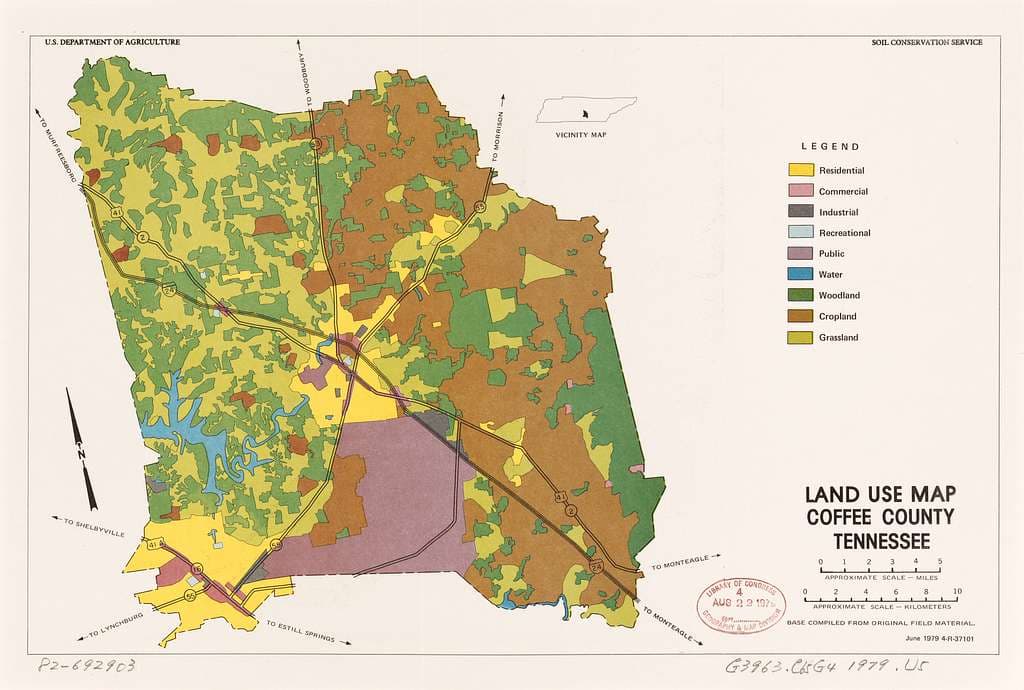
 The land use of a city will be divided into various uses depending on their zoning class.
Most municipalities organize their zoning codes around a few primary categories. The specifics vary from city to city, but the basic structure is consistent across the country.
Residential zones govern where people can live and what types of housing are allowed. These range from R-1 (single-family detached homes) through higher-density designations that permit duplexes, townhomes, and apartment buildings. The code will specify lot size minimums, building heights, setbacks, floor area ratios, and how many units you can put on an acre.[6][7]
Commercial zones designate areas for business activity—retail, offices, hospitality, services. Most cities break these into subcategories. Common commercial zoning classifications include neighborhood commercial (small-scale retail serving the surrounding area), general commercial (larger retail and office uses), and central business district (high-density, often mixed-use).[8][5] You can read more about these zones in our commercial zoning guide
Industrial zones cover manufacturing, warehousing, distribution, and heavy processing. These are usually split into light industrial (assembly, flex space, small fabrication) and heavy industrial (manufacturing plants, refineries, chemical processing). Industrial zones carry the strictest regulations around noise, emissions, truck traffic, and environmental impact.[1][9]
Agricultural zones protect farmland in rural and suburban fringe areas, usually through large minimum lot sizes and restrictions on what can be built.
Mixed-use and special districts are increasingly common. Mixed-use zoning allows residential, commercial, and sometimes light industrial uses within the same building or development. Think ground-floor retail with apartments above. This is the model cities are leaning into for walkable, transit-oriented neighborhoods.[8][6]
# The Regulations That Determine How You Can Build
 Illustrations showing Floor Area Ratios, an additional requirement within some zoning classes. Source: A New Zoning Plan for the District of Columbia. Harold M. Lewis, 1956.
Beyond the broad use categories, zoning codes are full of dimensional and operational requirements that directly affect your project's feasibility and cost. These often end up being design limitations that need to be understood before planning.
| Standard | Description |
|---|---|
| Minimum lot size | The smallest parcel you can build on. In some single-family zones, this can be an acre or more. |
| Floor area ratio (FAR) | The ratio of a building's total floor area to the lot size. A FAR of 2.0 on a 10,000-square-foot lot means you can build up to 20,000 square feet. |
| Setbacks | The required distance between a building and the property line on each side. These reduce the actual buildable footprint of a lot. |
| Height restrictions | Maximum building heights, expressed in feet, stories, or as a ratio to street width.[6] |
| Parking ratios | The number of parking spaces required per unit or per square foot. Parking requirements are a major cost driver and a frequent target of reform.[6] |
| Density limits | The maximum number of residential units or occupants allowed per acre or per lot. |
# What Happens When Your Plans Do Not Fit the Zoning
It is extremely common for a development to not fit neatly into the existing zoning. When that happens, you have a few paths:
A variance is a permission to deviate from a specific rule without changing the zoning of your property. Variances come in two types. An area variance lets you deviate from a dimensional rule—a setback, height limit, lot coverage maximum etc. A use variance lets you operate a use not allowed in the zone, like running a small commercial operation in a residential district. Use variances are much harder to get. To win one, you generally must prove a unique hardship inherent to the property (not one you created yourself) that makes the existing zoning effectively impossible to comply with.[^12]
Rezoning is a legislative change to the parcel's designated classification, approved by the city council or county board. This is a heavier lift. It requires a formal application, public notice, a planning commission review, a public hearing, and a vote. Depending on the jurisdiction and the complexity of the request, this can take anywhere from a few months to well over a year. The timeline gets longer if community opposition gets organized.[10][9]
A conditional use permit (sometimes called a special use permit) allows a specific use that the zoning code permits only with additional conditions. A school in a residential zone, for example, might be a conditional use: allowed, but with requirements around traffic management and operating hours.
In any of these scenarios, you need a realistic sense of the timeline and the odds before you commit resources.
# Zoning Is More Complicated Than It Looks
If you have only dealt with straightforward zoning designations—a single-family lot that is zoned single-family, a commercial building in a commercial district—it is easy to assume the system is simple. It is not.
Overlay zones add a second layer of regulation on top of the base zoning.[8][6] A historic preservation overlay might restrict what materials you can use or require design review. An environmental overlay near a waterway might limit impervious surface coverage. A transit-oriented development overlay might allow increased density but impose design standards. You can have a parcel that is zoned C-2 (general commercial) but also sits inside an overlay that changes the rules significantly.
Design guidelines and architectural review go beyond the numbers. Many jurisdictions have review boards that evaluate the aesthetics of a project such as materials, colors, massing, and how it relates to the streetscape. These are subjective and can add months to an approval timeline.
Form-based codes are an alternative to traditional Euclidean zoning that some cities are adopting. Instead of regulating primarily by use, they regulate by building form—height, placement, frontage type. The idea is to focus on how a building fits into the physical environment rather than what happens inside it.
Nonconforming uses are an ongoing reality. A property that was legally built under a previous zoning designation but no longer complies with the current code can usually continue to operate, but there are often restrictions on expanding, rebuilding after damage, or changing the use.
Planned Unit Developments (PUDs) allow developers to negotiate a custom set of zoning rules for a specific project, usually in exchange for public benefits like open space, affordable units, or infrastructure improvements. PUDs can offer more flexibility, but they also add a layer of political negotiation.
The point is that zoning is rarely as simple as looking up a designation and checking a list of permitted uses. The details matter, and they vary widely between jurisdictions.
# Who Decides Zoning (and How)
 Requesting a rezoning often requires an application before a planning commission or a city council board.
Zoning is local, and understanding who makes the decisions is just as important as understanding the rules themselves.
The planning department staff are your first point of contact. Planners review applications, interpret the zoning code, and provide recommendations to the decision-making bodies. They can tell you what is allowed, what would need a variance or conditional use permit, and what the process looks like. Building a good working relationship with the planning staff is one of the most practical things you can do.
The planning commission (or planning board) is typically an appointed body of citizens that reviews zoning applications, proposed code amendments, and development plans. They hold public hearings, take community input, and make recommendations to the elected body. In some jurisdictions, the planning commission has final authority on certain types of decisions, like conditional use permits.
The city council or county board is the elected body that has final authority over legislative zoning actions. Think rezonings, text amendments to the zoning code, and comprehensive plan updates. Their votes are influenced by staff recommendations, planning commission input, community sentiment, and political considerations.
Public hearings are a required part of most zoning processes. This is where neighbors, business owners, and community groups weigh in. Community opposition at a public hearing can slow down or kill a project, even if it meets every technical requirement. If you are pursuing a rezoning or a large conditional use permit, understanding the local political landscape and engaging with the community early is essential.
The whole process is public and political. Decisions happen in meetings, on the record, with input from people who live nearby. That is by design, but it also means that navigating the zoning process is as much about communication and relationship-building as it is about technical compliance.
# How to Check the Zoning on a Property
Before you purchase or develop any property, you need to confirm its zoning classification and understand what the rules actually allow. Here is how to do it:
Start with the municipal GIS portal or zoning map. Most cities publish interactive maps online where you can search by address and see the zoning designation, any overlay districts, and adjacent land uses. This gives you a quick first read on what you are working with.
Read the relevant section of the zoning code. Look up the specific designation — R-3, C-2, M-1, whatever it is — in the municipal code. Go through the permitted uses, conditional uses, dimensional requirements, and any special restrictions. Do not rely on summaries or third-party interpretations. Read the actual code.
Check for pending changes. Review planning commission and city council agendas for any proposed rezonings, text amendments, or overlay modifications that could affect the property. A parcel's zoning today might not be its zoning six months from now. Tools like GatherGov can help here—it indexes public meetings from 6,000+ jurisdictions, so you can quickly surface pending zoning discussions that might affect your property without manually digging through agendas.
Contact the local planning department. Talk to a staff planner. They can clarify ambiguities in the code, explain what the variance or rezoning process looks like in their jurisdiction, and give you a sense of how the department has handled similar situations. This conversation can save you months of guesswork.
Consult a land use attorney for anything complex. If your project requires a rezoning, variance, or conditional use permit, an attorney who specializes in local land use law is worth the investment. They know the process and the players.
If you are considering rezoning a property for a new project, it pays to understand how similar projects have fared in your target jurisdiction. GatherGov generates detailed reports on entitlement risk and approval timelines based on real public meeting data—so you can gauge your odds before you invest in an application.
# Frequently Asked Questions
What is the difference between zoning and land use? Zoning refers to the laws and codes that govern how land may be used. Land use describes how a property is actually being used. The two do not always match — a property might be zoned commercial but currently operating as a residence under a pre-existing nonconforming use.
Can zoning be changed? Yes. Property owners can apply for a rezoning, which requires a legislative vote by the city council or county board. The process involves a formal application, public hearings, and planning commission review. Approval depends on consistency with the comprehensive plan and the impact on the surrounding area.
What happens if I use my property in a way that violates zoning? You can face fines, orders to stop the non-conforming use, or requirements to modify or demolish non-compliant structures. Enforcement is handled by local code enforcement or the building department.
What is spot zoning? Spot zoning is rezoning a single parcel in a way that is inconsistent with the surrounding area and the comprehensive plan, done primarily for the benefit of the property owner. It is legally vulnerable and subject to challenge, though courts may uphold it if a reasonable basis for the distinction exists.[5]
Do zoning laws apply to federal land? No. Federal lands are not subject to state or local zoning. Federal agencies follow their own land management and environmental review processes.
# References
# Footnotes
-
Tulane University School of Law. "The Basics of Land Use and Zoning Law." October 2025. ↩ ↩[2]
-
Wikipedia. "Zoning in the United States." Updated January 2026. ↩ ↩[2]
-
Village of Euclid v. Ambler Realty Co., 272 U.S. 365 (1926). ↩
-
FindLaw. "Land Use and Zoning Basics." June 2024. ↩ ↩[2] ↩[3]
-
Bipartisan Policy Center (BPC). "What Are Zoning and Land-Use Regulations and How Do They Affect Housing Supply?" January 2022. ↩ ↩[2] ↩[3] ↩[4] ↩[5]
-
Acres (Land Values). "A Beginner's Guide to Understanding Zoning and Land Use." October 2025. ↩
-
TrueParity. "Understanding Zoning Laws: A Clear Guide." 2025. ↩ ↩[2] ↩[3]
-
Land Limited. "A Complete Guide to Zoning and Land Use Laws." 2025. ↩ ↩[2]
-
LegalMatch. "Ultimate Guide to Zoning and Land Use Laws." November 2025. ↩