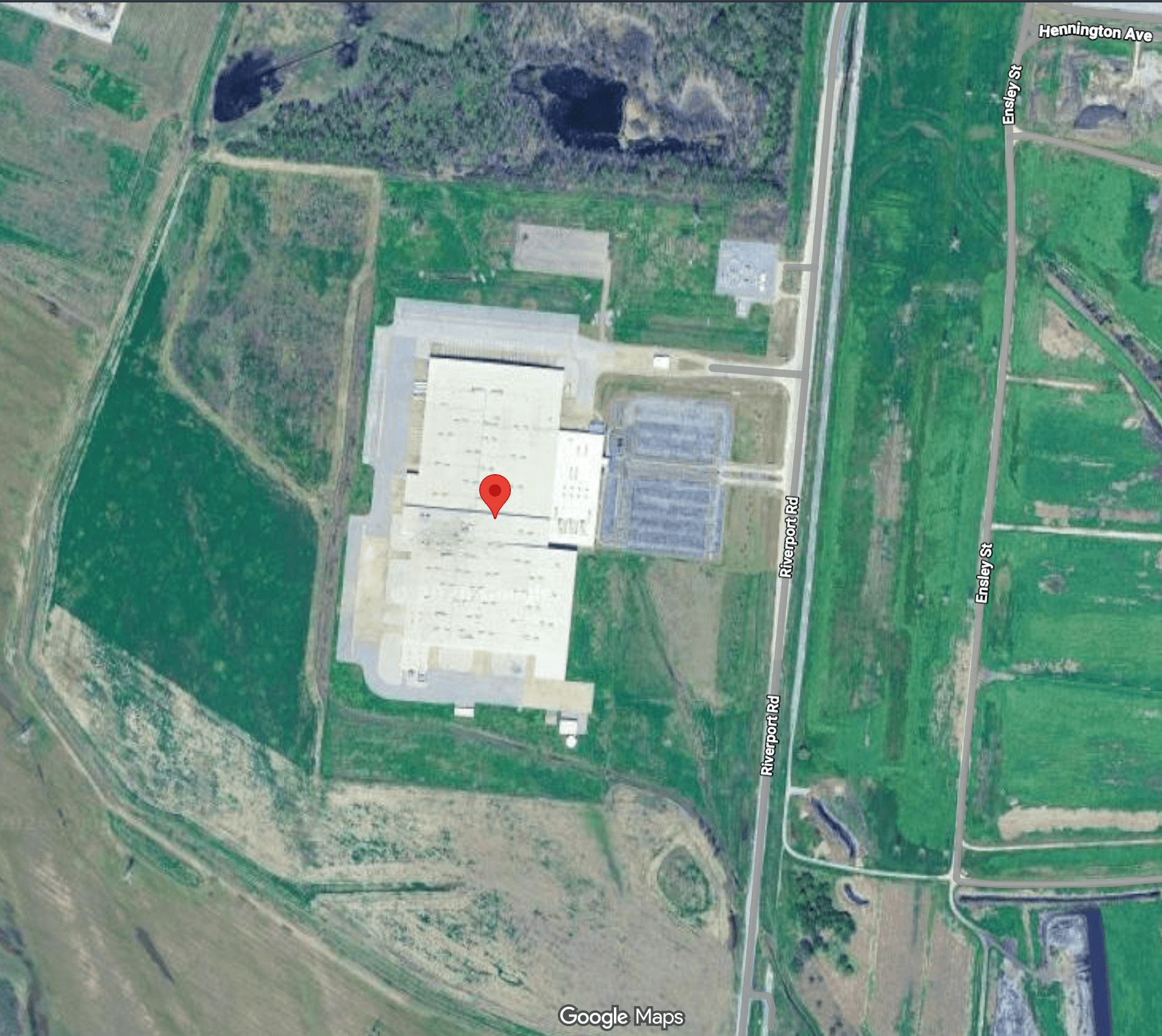
As data center opposition grows across American city halls, certain projects have become recurring case studies into the excess of the industry. One such project that is cited frequently among opposition speakers is xAI's "Colossus" data center in Southern Memphis. Colossus itself has a lot working against it—it violated permitting requirements, and it further burdened a disenfranchised community with pollution. But the stories of this data center have quickly drifted across the country, forming national myths that continue to empower misinformed opposition. Now, not only are elected officials forced to operate on misheard facts, but the misalignment of blame inhibits Memphis residents from holding industrial polluters accountable.
# The Ground Truth


The speaker in Memphis and the speaker in Charlotte are talking about the same project, one month apart. Yet, one sees the project as a reformable, potentially "sustainable data center" whereas the other sees it as a cancer-ridden, poisonous project.
At the center of this controversy is a data center in Southern Memphis. In 2024, xAI set their sights on Southern Memphis to build "Colossus 1"—a data center designed to power the company's new "Grok" AI bot. Located in the neighborhood of Boxton, the facility became fully operational[1] in June of 2024.
For many, the choice of site itself raised alarm bells. While industrial development isn't new to Boxtown, the predominantly Black neighborhood, has had a long history of industrial pollution from oil refineries and the TVA Allen gas plant. Today, the neighborhood hosts more than 17 industrial facilities[2], and has a historical legacy of acute public health concerns: arsenic at 300 times the federal limit in their drinking water[3], cumulative cancer risk of four times higher than the national average[4], and particulate matter in the air far exceeding the EPA's standards[5]. These pollutants have plagued Boxtown for decades—data centers are just the most recent and visible target.
And Colossus does make a nice target. The project was designed to rely on power from gas turbines rather than the grid—a decision central to the subsequent controversy. Gas turbines are able to relieve data centers' impact on the grid. However, they trade off by localizing climate impacts with NOx emissions.
To make matters worse, xAI—unlike other developers—ran many turbines without permits, leaving the turbines as "temporary[6]," which circumvented traditional review processes.
In mid-2025, on behalf of the NAACP, the SELC sent a notice of intent to sue X over Colossus 1's turbines that failed to obtain permits. Following the notice, X began to remove or seek out permits for its turbines, while disputes over their compliance continued.
# What Happened in Memphis City Hall
Three cities, three different stories. How Colossus is talked about changes as the story travels out of state
Colossus has been a recurring agenda on Memphis's public hearing docket since it became active. Much of the concern comes from the lack of transparency rather than the project itself; backdoor negotiations, a lack of public participation, and fast-tracked approval timelines left constituents feeling betrayed.
When environmental impacts did come up, they were centered on practical solutions and unkept promises. Residents viewed the projects as flawed but reformable, calling for stricter environmental provisions—or follow-through with existing ones—rather than a shutdown of entire projects.
For instance, a major selling of the project during its initial proposal was that it would use a wastewater recycling facility rather than relying on Memphis' drinking water. Mayor Paul Young cited it as the reason for his approval.
"We see this sale as a positive indicator of xAI's intent to deliver the greywater facility," Memphis Mayor Paul Young[7]
However, xAI partially broke this promise when they abruptly put the construction of their recycling facility on an indefinite pause[8]. Following negotiations and demands from organizations like Protect Our Aquifer (POA)[9], the city leveraged their power to force xAI to meet its promises. While Colossus had received all of its approvals, the facility still needed municipal land between the wastewater treatment plant and Colossus 1 to build a graywater recycling facility that would transform wastewater into cooling water for the company's supercomputers. Memphis council used this pending sale as a leveraging point, forcing xAI to accept a one-year deadline for resuming construction on the recycling facility. The agreement also had a clause stating that the land can be revoked if the company does not follow through with its promises. In the end, the city of Memphis sold 13 acres of land to a subsidiary of xAI[10] and xAI agreed to make substantial progress under the deadlines.
This practical, solution based approach colors other threads of opposition within Memphis. When organizations like the Memphis Community Against Pollution mobilized at meetings to demand council address air quality concerns, they asked for regulations and transparency—not blanket bans.[11] Campaign documents continually call for "support," "investment," and cooperation. Ultimately, opposition in Memphis is present, but it is remedy-focused, reasonable, and fact-based. The political telephone that followed was not.
# A Game Of Political Telephone
| Myth | Mentions in meetings | Fact |
|---|---|---|
| Memphis' data centers caused thousands of premature deaths. | "The National Institute of Health links these particles to the... two thousands of premature deaths annually" — Nick Clark, Hutto TX[12] | While some independent studies project health impacts in the future, estimates are both predictive and non-specific to singular projects. There are no confirmed deaths attributed to this facility. |
| xAI's data centers were the primary cause of Boxtown's elevated cancer and asthma rates, and they measurably worsen the air. | "...data centers start driving up cancer rates in the surrounding community, as is happening in Memphis, near the site of Elon Musk's Colossus data center." — Speaker, Cochise County, AZ Board of Supervisors, 2026-04-07[13] | Boxtown has historically suffered[14] from industrial pollution, with elevated cancer and asthma rates preceding the data centers by decades. Air pollution claims are also disputed—some modeling efforts find turbine emissions stayed below national standards[15]. |
| A peer-reviewed study found NOx up by 70%. | "The University of Tennessee conducted a study that found nitrogen oxide levels had increased 70% in the area immediately surrounding the data center and 10% in the closest neighboring community... a direct peer-reviewed study." — Staff briefer, Birmingham, AL City Council, 2026-01-13, ~55:53[16] | Peak NO2 in areas immediately surrounding the center was up ~79%, but the regional average rose only ~3% after June 2024[17], with the authors attributing it to both xAI and increased use of the TVA Allen plant. |
| The data centers use diesel generators, which are bad for the environment. | "Google Memphis, Tennessee and data centers... a massive data center that was put in with a large amount of backup diesel generators..." — Speaker, Romeo, MI Community Schools Board, 2026-01-26, ~1:02:06[18] | xAI's project uses methane gas turbines[19], which have a substantially lower environmental footprint[20] than diesel generators. |
| xAI's data centers are representative of the consequences of data centers in general. | "Colossus in Memphis is owned by Elon Musk and is the largest... AI data centers are being planned all over Tennessee." — Speaker, Murfreesboro, TN County Commission Meeting, 2026-06-11[21] | xAI was a uniquely bad case for several reasons: lack of transparency; placement in an already highly-polluted neighborhood; and bypassing environmental review by using loopholes. |
 Word Cloud of the most frequently occurring words alongside Colossus indicates what the travelling narrative is centered on
By the time the stories of Colossus reached the rest of Tennessee, the narrative began to change. Instead of mainly discussing procedural issues, residents concerned themselves with zoning, water, and grid capacity. These wider concerns motivated more aggressive regulations and legal opposition to the data centers.
In Crossville, Tennessee[22], meetings saw speakers use the example of Colossus to illustrate the water and grid impact of data centers, calling for more comprehensive legal protections for these resources. Some laws, such as Tennessee's House Bill 1847[23] that forces companies to absorb the cost of their infrastructure, have already enforced these protections.
A common recurring theme inside the state was residents suggesting study-first moratoriums: a ban on data centers until proper regulations can be developed.
In Davidson county, the metro council is looking to pass a 90-day moratorium[24] on data centers to give time for the council to develop more comprehensive legislation. In Wilson County, the committee passed a six-month moratorium[25] to both study the impacts of data centers and create strong regulations based on local data. In Knox county, the commission has approved a moratorium of more than one year[26].
Still, these concerns were grounded more in reality, citing warranted evidence and concerns about zoning and capacity. They used Memphis as a reference point rather than a horror story.
By the time the story left Tennessee, however, it became unrecognizable. Fears of worsened air quality fused with pre-existing environmental conditions in Memphis to create a national narrative that data centers were synonymous with causing asthma, cancer, and premature death—a marker of how concerns external to Tennessee are centered around human health.
In Charlotte, NC[27] and Cochise County, AZ[28], residents falsely attributed the cancer and asthma rates of Boxtown to xAI's data center projects. In reality, Boxtown has historically suffered from poor air quality that contributed to its consistently high cancer and asthma rates. Yet, this context is lost as the story travels.
Furthermore, the statistics that travelled were also misleading. In Birmingham, Alabama, one speaker came to the meeting with facts:
"The University of Tennessee conducted a study that found nitrogen oxide levels had increased 70% in the area immediately surrounding the data center and 10% in the closest neighboring community... a direct peer-reviewed study."
Staff briefer, Birmingham, AL City Council, 2026-01-13, ~55:53 ▶ watch clip
In one sentence, there were four impactful claims that were either incorrect or missed context; the regional average NO2 levels only rose by 3%[29], the numbers they quoted were different from the original study, and they cited a satellite analysis—a method of data collection that is infamous for its high margin of error.
Despite this, Birmingham city council used these concerns constructively. To mitigate pollution impacts of diesel generators, the council passed an ordinance banning all on-site generation with the exception of solar power.[30]
Yet, in most other places, people began to loosely attach statistics to the case, fearmongering constituents without a strong evidentiary basis. In Hutto, Texas, speakers were heard using South Memphis as a "real-life example" of data centers causing "thousands of premature deaths annually"[31]—a claim drastically different than anything being said in meetings in Memphis itself.
The meeting ladder shows how fact morphs into fiction over time—and so do the numbers.
# The facts start drifting
Based on GatherGov's data, the Memphis case was referenced in 140 distinct meetings across 34 states. xAI's data center narrative has become most impactful out of state, with 91% of the mentions happening outside of the state.
Inside Tennessee, the focus is the economy, the grid, water, noise, and air quality—a bundle of concerns focused on land-use. It's only out of Tennessee where you start to hear a high amount of mention of terms like "cancer" and "poison."
Notably, the name Elon Musk sticks to the narrative outside Tennessee while pertinent evidence doesn't, with Musk being named in 69% of meetings outside Tennessee while the real figure was cited in only 4 of the 128.
The villain travels, but the evidence doesn't; it's easier to attribute fault and use sensational numbers than rely on research that accurately represents the lived realities of those in Memphis. Part of what makes the story so sensational is that it can be attached to figures like Elon Musk

"You don't work for Sam Altman or Elon Musk... If you don't halt this data center, some of you guys are out for re-election."
— Speaker, Pittsburg, CA City Council, 2026-06-15, ~2:39:48 · ▶ watch clip
# What Next?
The narrative of xAI's data center evolved rapidly as it spread across the country, stripping it of necessary context and evidence. What is left out in the discussion of Memphis is the decades of industrial polluters that have contributed to its present-day environmental conditions. It treats data centers as an outlier to be independently combatted rather than another example of environmental injustice in Memphis. The political telephone comes at the expense of the productive regulations that residents have called for in the first place.
The irony is that the case is being flattened from both ends; its messengers exaggerate statistics and stray from well-founded criticisms, and the state continues to dismiss their concerns entirely. This reflects a broader trend of the federal government taking increasingly strong anti-regulation stances on data centers. After the NAACP's lawsuit, the U.S. Department of Justice moved to dismiss the suit entirely[32], arguing that intervening in the data center's operation constituted a national security threat—despite legitimate claims of xAI's procedural violations. They claimed that the Department of Defense's reliance on xAI meant that federal agencies took precedence over environmental enforcement.
Amid all this political jockeying, the people of Boxtown remain forgotten.The takeaway from this situation for residents and policymakers is simply to remember the ground truths and not stray to the extreme of misinformed opposition or blanket approval.
And for developers building data centers itself, the answer is to be more thoughtful with their designs. Don't break environmental regulations, because any misstep can be used as an example to indict the entire industry nationally. Understanding why residents strongly oppose projects can be crucial to implementing them.
GatherGov[33] exists to help real estate professionals navigate the complexities of municipal entitlement. We track risk signals from more than 7200 jurisdictions—public-comment sentiment, council voting patterns, existing development pipeline—helping teams manage site selection, entitlement flows, and community engagement plans. You can read more about opposition to hyperscalers here[34].
If you want more analyses like this one, subscribe to the GatherGov newsletter[35]. One piece a week, focused on the political and regulatory signals that don't show up anywhere.
# Footnotes
-
Southern Environmental Law Center
selc.org ↗ ↩ -
Politico
politico.com ↗ ↩ -
TVA Groundwater Monitoring Report
ccr.tva.gov ↗ ↩ -
ScienceDirect — Atmospheric Environment
sciencedirect.com ↗ ↩ -
Tennessee Lookout
tennesseelookout.com ↗ ↩ -
Mississippi Today
mississippitoday.org ↗ ↩ -
Action News 5
actionnews5.com ↗ ↩ -
FOX13 Memphis
fox13memphis.com ↗ ↩ -
Protect Our Aquifer
protectouraquifer.org ↗ ↩ -
WREG Memphis
wreg.com ↗ ↩ -
Memphis Community Against Pollution — press statement
static1.squarespace.com ↗ ↩ -
Nick Clark, Hutto TX City Council
huttotx.new.swagit.com ↗ ↩ -
Cochise County, AZ Board of Supervisors, 2026-04-07
youtube.com ↗ ↩ -
Vanderbilt Political Review
vanderbiltpoliticalreview.com ↗ ↩ -
The Conversation
theconversation.com ↗ ↩ -
Birmingham, AL City Council, 2026-01-13
facebook.com ↗ ↩ -
TIME
time.com ↗ ↩ -
Romeo, MI Community Schools Board, 2026-01-26
youtube.com ↗ ↩ -
The Guardian
theguardian.com ↗ ↩ -
Generac — white paper
generac.com ↗ ↩ -
Murfreesboro, TN County Commission, 2026-06-11
youtube.com ↗ ↩ -
Crossville, TN meeting
youtube.com ↗ ↩ -
Tennessee General Assembly — HB1847
wapp.capitol.tn.gov ↗ ↩ -
WKRN — Nashville / Davidson County
wkrn.com ↗ ↩ -
WKRN — Wilson County
wkrn.com ↗ ↩ -
WATE — Knox County
wate.com ↗ ↩ -
Charlotte, NC meeting
youtube.com ↗ ↩ -
Cochise County, AZ meeting
youtube.com ↗ ↩ -
TIME
time.com ↗ ↩ -
City of Birmingham
birminghamal.gov ↗ ↩ -
Hutto, TX City Council
huttotx.new.swagit.com ↗ ↩ -
U.S. Department of Justice
justice.gov ↗ ↩ -
GatherGov
gathergov.com ↗ ↩ -
GatherGov — Opposition to Hyperscalers
gathergov.com ↗ ↩ -
GatherGov Newsletter
gathergov.com ↗ ↩