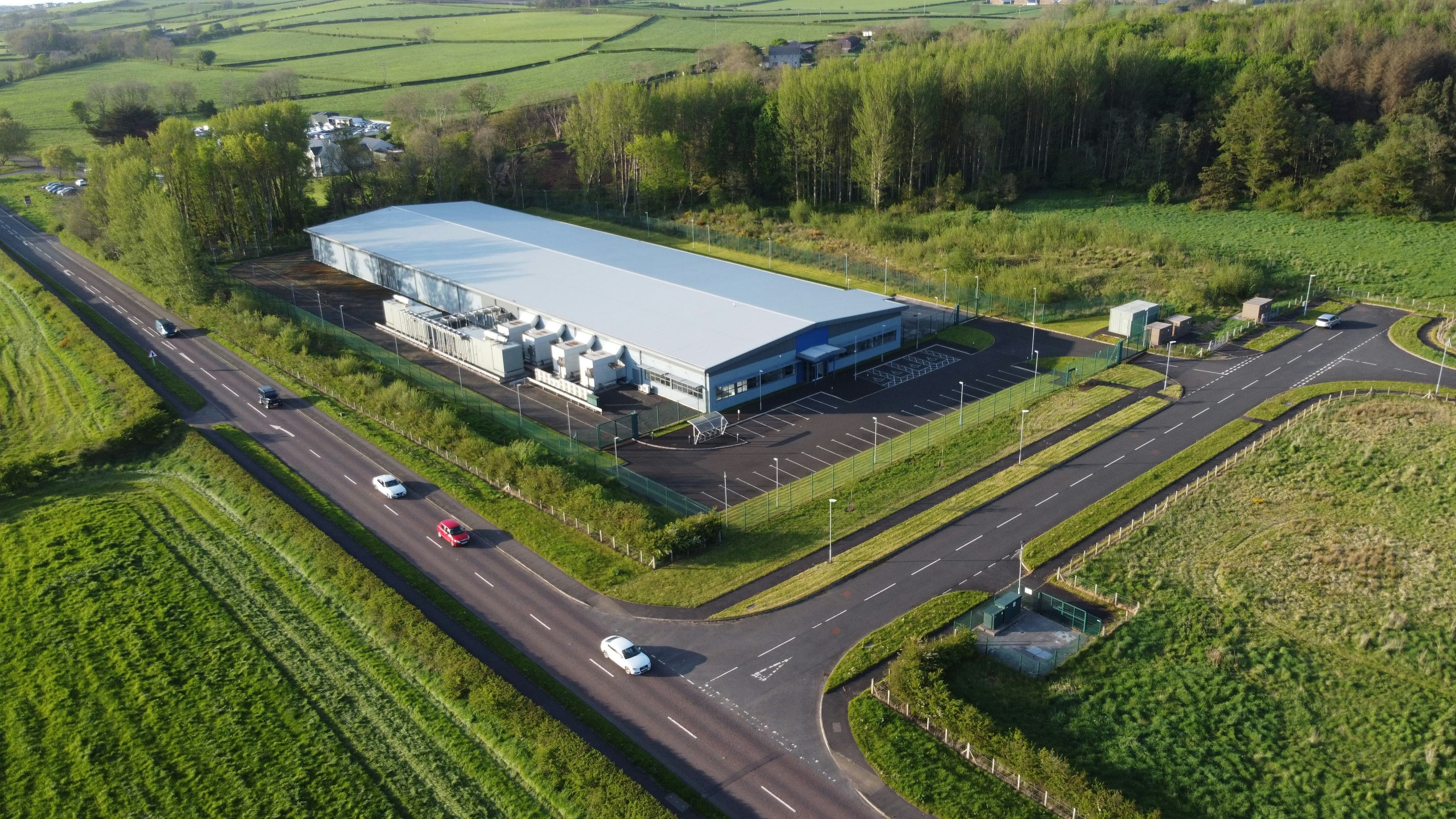
A city council, eager for community investment from a prospective data center, approves a permit under the premise of sustainable goals and transparency—only to find non-compliance and excessive resource extraction by developers in the years that follow.
A developer, eager to build a data center, approaches a town with the promise of revenue, sustainable practices, and closed-loop resource usage—only to be blocked instantly by a city council used to companies failing on their promises.
Both stories are real, and both are repeating themselves across the country. Neither proves that a mutually beneficial data center is impossible to build. Instead, they underscore why promises need to be legally binding—not as a concession, but as a way to restore trust in communities while holding developers to their agreements. A data center community benefit agreement is increasingly the mechanism that makes that possible.
# Data Centers Live and Die on Their Promises
It's no surprise that data centers have drawn strong opposition across the country. Despite that trend, developers have won approval in many constituencies by making community-specific promises. From environmental precautions such as closed-loop cooling systems to targeted revenue allocations, making and keeping promises can be the difference between a contentious approval and one the community welcomes. Following through also has long-term consequences—being a good neighbor is what lets developers keep building.

"They know that wherever they go, if they build a data center that is not friendly to the community, and if they operate on an annualized basis — not in a partnership way — that could impact them from being able to build the next data center." — Mayor Cohen Barnes of DeKalb, Illinois, on the Meta data center[1]
Much of the data center debate has shifted from a general question of what data centers are to a benefit-by-benefit evaluation of how a center affects a specific community. Under those conditions, trust is central to gaining favor.
# Broken Promises Leave a Mark
Trust is a resource that depletes fast when developers break their promises.
In Fayetteville, Georgia, QTS began construction of its Project Excalibur data center in 2023.[2] It was advertised as an economic blessing with a closed-loop system that would have a very limited impact on the county's water supply. The developer also promised improvements to stormwater systems and other county infrastructure.[3] Fayetteville's council members voted unanimously to approve the project.[4]
 QTS development in Fayetteville, Georgia
A series of broken promises by QTS destroyed the project's optics and left a lasting negative perception of data centers in the county. Despite claims of a closed-loop system with limited water impact and a commitment to transparency, an investigation prompted by complaints of unusually low water pressure uncovered two unpaid industrial-scale water hookups that used water well above the agreed peak use level—29 million gallons.[5] The controversy, while contested, was worsened by a coinciding drought, which enraged residents who were simultaneously being told to conserve water by not watering their lawns. Only months after Fayetteville's City Council voted to ban new data centers in every district of the city,[6] the controversy reinvigorated vehement opposition to construction projects. One broken promise painted all data centers in a bad light.
In Nashville, Tennessee, Oracle received more than $65 million in grants to create nearly 6,000 jobs at an average salary of $110,000.[7] Three years later, Oracle reported only 637 jobs created[8]—at the same time it laid off thousands of existing employees.[9] Because the commitment was not binding, Oracle could not be forced to return the $65 million, sparking outrage across the city. Council members, community groups, and residents quickly turned against the projects.
A lack of enforceable restrictions has become a recurring concern in many counties among city officials and residents alike.

 Residents and City Council members of Batavia, Illinois, on Hut 8's proposed data center[10]
Residents no longer trust voluntary pledges, which makes data centers harder to build. That is exactly when framing, explaining, and ensuring that promises are enforceable becomes most crucial to gaining approval.
# What Does "Enforceable" Actually Mean?
Developers across the country have shown how they can work with municipalities to create effective, binding, and mutually beneficial commitments.
A Community Benefit Agreement (CBA) is a legally binding contract between a developer and a municipality. It puts a developer's proposed benefits in writing with an enforcement mechanism, holding developers accountable and rebuilding community trust. CBAs can cover anything from strict environmental monitoring requirements to specific revenue and job targets.
They don't just work in theory—they have a long track record across every type of development.
In 2001, the first comprehensive CBA was negotiated to build the Staples Center in South Park, Los Angeles, under conditions that legally bound developers to invest $2.5 billion in surrounding development, along with living-wage and local-hiring requirements.[11]
 South Park, Los Angeles
In 2012, the Oakland Army Base redevelopment reserved 50% of construction jobs for local residents and implemented substantial labor protections in order to gain the approval needed to redevelop a decommissioned military site.[12]
In 2024, Jacksonville's City Council agreed to the largest CBA in NFL history—the approval of a $1.4 billion renovation of EverBank Stadium was paired with $300 million of combined investment in the surrounding neighborhood, including expanded affordable housing and homelessness mitigation.[13]
Data center developers have increasingly agreed to CBAs proactively. In St. Louis, Missouri, the original permit required the developer to meet strict wastewater standards, renewable targets, and recycling requirements under audit, at the risk of losing the permit.[14] In Lancaster, Pennsylvania, CoreWeave put its promises on paper by signing a CBA that restricts water usage and sets noise limits.[15] These mechanisms reduce skepticism about whether data centers will actually meet their promises—and demand for them is large.
"I'm a big fan of community benefit agreements."
— Adams County Commissioner Steve O'Dorisio, on a prospective Adams County data center[16]
If you're navigating a live entitlement process, GatherGov can help you track how nearby jurisdictions are structuring their CBAs—which environmental and revenue terms are becoming standard, and where public sentiment is trending—so you're not negotiating blind.
While conventional development can often rely on voluntary commitments, distrust in data centers means regulation now comes first. Local governments have grown stricter, especially as data centers have become a political issue deciding local elections across the country. Illinois Governor JB Pritzker, for example, created a framework requiring CBAs as a condition of eligibility for tax incentives statewide.[17] Developers who wait for terms to be imposed on them, instead of binding themselves early, tend to get less favorable outcomes. Those who start early—enshrining promises in writing, disclosing changes to the public, and prioritizing resident trust—see the most success.
 Public-comment language from data center discussions
With words like "question" and "information" dominating data center discussions, it's clear that dialogue and trust between developers and residents are essential. Promises enshrined in law let communities believe a developer's words mean something—at a time when trust has plummeted.
# Frequently Asked Questions
# What is a community benefit agreement for a data center?
A community benefit agreement is a legally binding contract between a data center developer and a municipality that puts the developer's promised benefits—water limits, job targets, revenue commitments, environmental standards—into an enforceable document with consequences for non-compliance, such as losing a permit.
# Why do data centers face so much community opposition?
Opposition is largely driven by broken promises on prior projects. High-profile cases involving excess water use during droughts and unmet job commitments have made residents skeptical of voluntary pledges, so communities increasingly demand enforceable terms before approving new projects.
# Are community benefit agreements legally enforceable?
Yes. Unlike voluntary pledges, a CBA is a binding contract. If a developer fails to meet its terms, the municipality can pursue enforcement mechanisms written into the agreement, which can include financial penalties or revocation of permits.
# How can a data center developer improve its chances of approval?
Developers improve approval odds by proposing enforceable commitments early, putting promises in writing through a CBA, disclosing changes transparently to the public, and demonstrating a track record of being a reliable community partner rather than relying on non-binding assurances.
Data centers are one of the fastest-moving fronts in municipal politics, and the terms that win approval in one jurisdiction quickly become the expectation in the next. Subscribe to the GatherGov newsletter for one piece a week on the political and regulatory signals that don't show up anywhere else. You can also read more about data center case studies here.
# Footnotes
-
Capitol News Illinois, "How do data centers benefit the places where they're built? Local mayors give mixed reviews." https://capitolnewsillinois.com/news/how-do-data-centers-benefit-the-places-where-theyre-built-local-mayors-give-mixed-reviews/ ↩
-
Data Center Dynamics, "Project Excalibur: QTS planning 16-building, 6.6 million sq ft development in Fayetteville, Georgia." https://www.datacenterdynamics.com/en/news/project-excalibur-qts-planning-16-building-66-million-sq-ft-development-in-fayetteville-georgia/ ↩
-
Atlanta Regional Commission, "2022 Project Excalibur DRI 3813 – Final Report." https://documents.atlantaregional.com/Land%20Use/Reviews/ID5283/2022%20Project%20Excalibur%20DRI%203813%20-%20Final%20Report.pdf ↩
-
Fayette County News, "Fayetteville Council approves agreement with QTS data center." https://www.fayette-news.net/news/fayetteville-council-approves-agreement-with-qts-data-center/article_ab0b0716-0fb4-11ee-9b7d-f3974dacf3d5.html ↩
-
Politico, "Georgia data centers water" (May 8, 2026). https://www.politico.com/news/2026/05/08/georgia-data-centers-water-00909988 ↩
-
City of Fayetteville, GA, "Data Center Discussion." https://www.fayetteville-ga.gov/746/Data-Center-Discussion ↩
-
Associated Press, "Oracle Nashville jobs and grants." https://apnews.com/article/business-austin-texas-tennessee-nashville-90bf50b87b570274ea84b066eeaab329 ↩
-
TN Tribune, "Rep. Behn: Oracle promised Tennessee 6,000 jobs. They've delivered 637 — and now they're laying off workers." https://tntribune.com/rep-behn-oracle-promised-tennessee-6000-jobs-theyve-delivered-637-and-now-theyre-laying-off-workers/ ↩
-
CNBC, "Oracle AI job cuts / layoffs" (June 23, 2026). https://www.cnbc.com/2026/06/23/oracle-ai-job-cuts-layoffs-21000.html ↩
-
Batavia, Illinois public meeting on Hut 8's proposed data center. https://www.youtube.com/watch?v=ktDiFjkzpfI ↩
-
City of Falls Church, VA, meeting materials on the Staples Center community benefit agreement. https://fallschurch-va.granicus.com/MetaViewer.php?view_id=2&clip_id=2394&meta_id=124531 ↩
-
The Democracy Collaborative, "Community Benefit Agreements (CBAs)." https://www.democracycollaborative.org/community-benefit-agreements-cbas ↩
-
News4Jax, "$4M in Jags stadium deal money is coming to the Eastside soon; residents are pushing for inclusion, transparency." https://www.news4jax.com/news/local/2025/09/18/4m-in-jags-stadium-deal-money-is-coming-to-the-eastside-soon-residents-are-pushing-for-inclusion-transparency/ ↩
-
City of St. Louis, MO, "Data center permit approved." https://www.stlouis-mo.gov/government/departments/mayor/news/data-center-permit-approved.cfm ↩
-
LancasterOnline, "Lancaster data center agreement's benefit to community questioned." https://lancasteronline.com/news/local/lancaster-data-center-agreement-s-benefit-to-community-questioned/article_b2654db6-c6e3-4719-8a0e-1f839c1e325e.html ↩
-
Adams County, CO, Board of County Commissioners Study Session (March 11, 2026). https://www.youtube.com/watch?v=6_CZHA9_u1g&t=2130s ↩
-
Chicago Reader, "Data centers, Illinois, and the Power Act." https://chicagoreader.com/news/environment/data-centers-illinois-power-act/ ↩