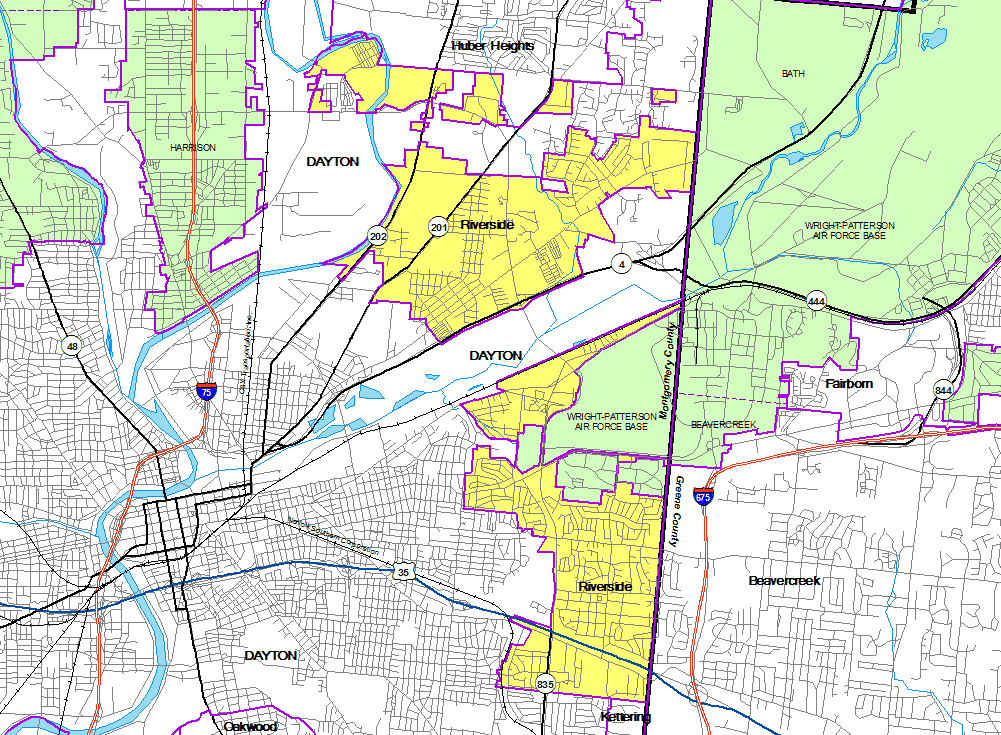
A developer finds a perfect parcel. It could be land situated right next to a power plant that would minimize transmission cost, or a parcel on a busy thoroughfare that suits an industrial developer. There is just one caveat—it is not zoned for the use you want. In these instances, developers turn to the nebulous process known as rezoning.
Rezoning is a necessary evil in the real estate industry. The process is long, expensive, and risky. But a successful rezoning application can increase a parcel's value substantially.
So what exactly is rezoning? And when is it used? The term often gets used as a catch-all for any moment when a landowner wants to do something the zoning code does not allow. But not every change requires a rezoning. Understanding when this process needs to be called up is an important part of understanding land entitlement.
In short, rezoning is the act of changing the zoning district assigned to a parcel of land from one classification to another. If a lot is zoned for single-family residential and the owner wants it zoned for commercial use, changing that designation is a rezoning. It is a legislative act, made by an elected body, that alters the zoning map itself.
# Why the Word "Rezoning" Gets Used Wrong
The core misconception is treating rezoning as a synonym for "getting permission to do something the code doesn't currently allow." That bucket is much bigger than rezoning, and rezoning is only one tool inside it. There are no universal terms or processes for zoning in the United States—the vocabulary shifts state to state and city to city[1]—which makes the confusion worse. But the underlying distinctions are consistent, interpretable through the following statement.
Rezoning changes the category what was supposed to be built there. Everything else is works within the text of permissible uses in that district..
 Only one of these three redraws the zoning map.
# Rezoning vs. a Variance
A variance is a limited, discretionary waiver of a specific zoning requirement, granted when strict application of the rule would create a practical difficulty or unnecessary hardship because of some unusual physical characteristic of the parcel[2]. Think of a lot with an odd shape or a steep grade. There, the owner might need to build three feet closer to the property line than the setback rule allows. That is an area (or dimensional) variance—relief from a measurable standard like setback, height, or lot coverage.
Critically, a variance leaves the parcel's zoning classification completely untouched[3]. You are not changing what district the land is in; you are asking for a narrow exception to one rule inside that district. Variances are typically decided by a board of zoning appeals acting in a quasi-judicial capacity, not by the city council, and the hardship standard is deliberately strict. Courts have consistently held that economic hardship alone—"the project pencils out better with the variance"—does not qualify[4]. The hardship has to arise from the land itself.
There is also a use variance, which permits a use the code prohibits in that district. Because a use variance effectively rewrites the map for a single parcel, boards hold it to an even stricter standard, and some states prohibit use variances entirely, forcing owners to seek a rezoning instead[5].
# Rezoning vs. a Conditional or Special Use Permit
A conditional use permit (also called a special use permit or special exception, depending on where you are) authorizes a use that the zoning code already identifies as allowable in that district—but only after case-by-case review and with conditions attached[6]. A church or a school in a residential zone is the classic example: the code anticipates that the use might belong there, lists it as a conditional use, and asks the applicant to demonstrate it will not harm the surrounding area.
The key difference from a variance is that you do not have to prove hardship. The code has already decided the use can work there under the right conditions[7]. And the key difference from rezoning is, again, that the district does not change. The use was permitted all along, conditionally; you are simply satisfying the conditions.
A useful way to frame these differences is to ask yourself the question: are you seeking approval of what you want to do, or relief from how you must do it? If the use is only allowed conditionally in the district, you need a special use permit. If the use is flat-out prohibited in the district, neither a variance nor a permit can save you—your only path is to change the district itself, which is a rezoning[8].
- Variance — relief from a dimensional rule (setback, height); requires hardship; no district change.
- Conditional/special use permit — a use the code already anticipates; requires meeting conditions, not proving hardship; no district change.
- Rezoning — changes the district classification itself; legislative; the map is redrawn.
If your project only fits after the district changes, you are talking about rezoning. If it fits within the current district once you clear a hurdle, you are not.
# How the Current Law Came to Be
You cannot rezone land unless zoning exists in the first place, and zoning as we know it was only invented less than a century ago. Its constitutional foundation was laid by two Supreme Court cases three years apart. These cases form the basis of what municipality can and cannot do when it draws—or redraws—a zoning map.
# Euclid v. Ambler: Zoning as a way to prevent pigs in a parlor
 Euclid created the rule for the very first zoning map
The first case is Village of Euclid v. Ambler Realty Co., decided in 1926[9]. The facts are almost quaint. Ambler Realty owned 68 acres in Euclid, Ohio, a suburb of Cleveland, and planned to develop the land for industry as Cleveland's industrial growth spilled outward. In 1922, the village adopted a comprehensive zoning ordinance—six use classes, three height classes, four area classes—that carved Ambler's land into districts and blocked the industrial development the company had counted on[10]. Ambler sued, arguing the ordinance had gutted its property value and amounted to a taking without due process under the Fourteenth Amendment.
At the time, zoning was a new and contested idea, and there were serious arguments that telling an owner how to use private property was an unreasonable government intrusion[11]. The Court disagreed. Writing for a 6–3 majority, Justice Sutherland held that a zoning ordinance was a valid exercise of the municipality's police power—the same power that lets a government abate a nuisance. And a nuisance, Justice Sutherland wrote, may be merely a right thing in the wrong place, like a pig in the parlor instead of the barnyard[12].
That decision opened the floodgates. With the constitutional question settled, zoning ordinances spread across the country. Today nearly every local government in the United States has one, with Houston the famous large exception[13]. It is worth highlighting that this discretion granted by the Court to the cities was later used to entrench racial and economic segregation through exclusionary zoning[14]. That legacy is a live issue in planning debates now, and it is part of why rezoning is often so contentious.
# Nectow v. Cambridge: But It Has to Make Sense
 While Euclid stated that cities had the power to implement zoning, Nectow decided that the changed zoning needs to make sense. Image Source: https://www.inversecondemnation.com/2026/05/you-dont-look-a-day-over-98-nectow-v-city-of-cambridge.html
Alongside Euclid, another major case set the legal standards for how zoning is implemented. Nectow v. City of Cambridge (1928) put limits on the power granted to cities under Euclid[15]. Written by the same Justice Sutherland just two years later, Nectow was the first time the Supreme Court struck a zoning classification down.
Nectow is different than Euclid. While Euclid was a facial challenge—an attack on zoning as a concept—Nectow was an as-applied challenge. The owner accepted that zoning was legal in general but argued that placing his particular parcel in a residential district, which killed a pending sale for industrial use, was arbitrary and bore no real relationship to the public good[16]. A court-appointed master who inspected the site agreed that the residential designation was out of sync with the mixed industrial uses already surrounding the land. The Court held that even a facially valid zoning scheme is unconstitutional as applied to a specific parcel if the restriction bears no substantial relation to the public health, safety, morals, or general welfare[17].
These two are still the frame that governs rezoning today. Euclid says a government may zone. Nectow says it has to do so in a way that actually makes sense for the land in question. Cities do not have a blank check.
# The Two Fundamental Forms of Rezoning
Technically, "rezoning" comes in two forms:
A zoning map amendment changes the zoning district on a particular parcel or set of parcels[18]. A developer with land at the edge of town applies to change it from agricultural to single-family residential; if approved, the official map is redrawn to show the new district. This is what people almost always mean when they say rezoning, and for good reason—it is by far the more common of the two[19].
A zoning text amendment rewrites the actual language of the zoning code. A change in the text applies to every property in a district, across the whole city. An amendment limiting the size of satellite dishes, or adding a new use to the list of what is permitted in a commercial zone, is a text amendment[20].
Both are legislative actions requiring approval from the governing body, and both usually have to conform to the goals laid out in the community's comprehensive plan[21]. But they operate on different objects—one on the map, one on the rulebook.
# The Vehicles Rezoning Actually Shows Up As
In practice, "rezoning" arrives wearing several different costumes. When you are underwriting a deal or tracking an entitlement, you will encounter these variants:
 All five are rezonings. The difference is how much the city negotiates up front.
Straight (or general) rezoning. The simplest form: change the parcel from District A to District B, and it is now subject to all the standard regulations of District B, no strings attached. Clean, but it gives the municipality less control over exactly what gets built, which is why many jurisdictions steer applicants toward the next option.
Conditional (or contract) rezoning. A legislative map amendment with site-specific conditions baked into the approval[22]. The applicant offers commitments—a traffic mitigation, a landscaped buffer, a cap on building height, a particular site plan—and the governing body approves the rezoning subject to those conditions, which then bind the land as a permanent amendment to the ordinance and the map[23]. This is enormously common for larger or more sensitive projects, because it lets a city say yes to a rezoning while controlling the specifics. Note the mechanism differs from a variance or use permit: the conditions are part of a legislative decision, negotiated up front, not administrative relief granted afterward.
Planned Unit Development (PUD). Effectively a custom zoning district created for a single project. Rather than fit a mixed-use or master-planned development into an off-the-rack district, the developer and city negotiate a bespoke set of standards—densities, uses, open space, phasing—and adopt it as its own district. Many jurisdictions require a PUD rezoning for developments above a certain size[24]. A PUD is a rezoning, but it is one where the "District B" you are rezoning into is written from scratch for your parcel.
Overlay districts. A layer placed on top of existing base zoning that adds or modifies requirements—historic-preservation overlays, floodplain overlays, transit-oriented-development overlays. Adopting or applying one is a form of rezoning that supplements rather than replaces the underlying district.
Pre-zoning for annexation. When a city plans to annex land from an adjacent county, it may pre-zone the property—assigning the zoning district that will take effect once the land formally joins the city[25]. It is a rezoning executed in advance of jurisdiction.
The practical lesson: when someone says a project "got rezoned," the interesting question is which vehicle. A straight rezoning, a conditional rezoning with negotiated commitments, and a PUD carry very different risk, timeline, and negotiating dynamics.
# How a Rezoning Actually Moves
Because rezoning is legislative, it moves like a piece of legislation—through review bodies, a public hearing, and a vote by elected officials.
The typical arc runs from application to staff review to a planning commission recommendation to a public hearing to the final vote by the governing body. In most U.S. jurisdictions, planning staff and the planning commission serve only in an advisory capacity—they analyze and recommend, but the binding decision belongs to the city council or county board[26].
 The applicant files; the municipality does everything after. Only the last step binds.
Two things make this process harder than a flowchart suggests.
First, comprehensive plan consistency. Most rezonings must align with the community's adopted comprehensive plan, and many jurisdictions now require the governing body to adopt a written statement of reasonableness or consistency when it approves a map amendment[27]. A rezoning that clashes with the plan is vulnerable.
Second, the spot zoning trap. Spot zoning is singling out one small parcel for treatment inconsistent with the surrounding area and the plan, usually to benefit that owner. A simple test: does the rezoning comply with the comprehensive plan? If it does not, it starts to look like spot zoning, and it becomes legally shaky[28]. This is a large part of why conditional rezoning and comprehensive-plan amendments so often travel alongside rezoning requests—they are the tools for keeping a change defensible.
And then there is the human factor. A rezoning—especially one that affects a neighborhood's character—reliably draws packed hearings, organized NIMBY opposition, and high emotion[29]. That opposition is not noise; it is often the single biggest variable in whether an application succeeds.
Which is the strategic point worth ending on. The technical distinctions—map versus text, straight versus conditional, variance versus permit—determine which door you walk through. But what determines whether you walk out with an approval is usually what a municipality and its residents have already said they want, fear, and will trade for. Reading that signal across the public record—council minutes, planning commission comments, prior swing votes—before you file is the difference between a rezoning strategy and a rezoning gamble. That intelligence is scattered across thousands of jurisdictions' meeting records, which is precisely the problem GatherGov exists to solve: surfacing the municipal signals that tell you how a rezoning is likely to land before you commit capital to it.
# Frequently Asked Questions
# Is rezoning the same as a variance?
No. A variance is a narrow, hardship-based waiver of a specific rule (like a setback) that leaves the parcel's zoning district unchanged and is usually granted by a board of zoning appeals. Rezoning changes the zoning district itself and is a legislative decision made by elected officials. They solve different problems and go through different bodies.
# Who approves a rezoning?
The governing body—typically a city council or county board of supervisors—because rezoning is a legislative act. Planning staff and the planning commission review the application and make recommendations, but in most jurisdictions they cannot make the final decision.
# How long does rezoning take?
It varies widely by jurisdiction and project complexity, but a rezoning is measured in months, not weeks, because it requires public notice, hearings, and a legislative vote. Conditional rezonings and PUDs, which involve negotiation over site-specific commitments, generally take longer than a straight map amendment.
# What is spot zoning?
Spot zoning is singling out one small parcel for a zoning classification inconsistent with the surrounding area and the comprehensive plan, typically to benefit the individual owner. It is legally disfavored. The quickest test is whether the rezoning conforms to the comprehensive plan—if it does not, it may be challenged as illegal spot zoning.
# Can a rezoning be denied even if it meets all the technical requirements?
Yes. Because rezoning is a legislative decision, the governing body has broad discretion and is not obligated to approve an application simply because it checks every box. There is no right to a rezoning the way there can be a right to build a permitted use. Public opposition, plan inconsistency, and political judgment can all result in denial.
# What is the difference between a zoning map amendment and a text amendment?
A map amendment changes the zoning district assigned to specific parcels—it redraws the map. A text amendment changes the language of the zoning code itself, affecting every property the provision applies to. Both are rezonings in the technical sense, but the map amendment is what people usually mean.
# Footnotes
-
PropertyMetrics, "Rezoning, Variance, or Conditional Use Permit: Which One Can Solve Your Zoning Problem?" — noting there are no universal laws, terms, or processes for zoning, which vary state to state and city to city. ↩
-
PropertyMetrics, "Rezoning, Variance, or Conditional Use Permit." Definition of a variance as a discretionary, limited waiver of a zoning requirement for practical difficulty or unnecessary hardship tied to an unusual physical characteristic of the parcel. ↩
-
LegalClarity, "Zoning Variance: Standards, Hardship, and Approval Process" — a variance grants relief from one rule while leaving the property's zoning classification untouched. ↩
-
Calichi, "Variance vs. Conditional Use Permit" — courts have consistently held that economic hardship alone is insufficient for a variance; the hardship must arise from physical characteristics of the property. ↩
-
LegalClarity, "Zoning Variance" — some states prohibit use variances entirely, requiring property owners to seek rezoning instead. ↩
-
Calichi, "Variance vs. Conditional Use Permit" — a conditional use permit (also called special use permit or special exception) authorizes a use the code identifies as allowable in the zone, subject to review and conditions. ↩
-
LegalClarity, "Zoning Variance" — special exceptions do not require proving hardship because the code already provides that the use can work there under the right conditions. ↩
-
Bean, Kinney & Korman, "Special Exceptions vs. Variances: Picking the Right Path in Virginia Land-Use Cases" — framing the choice as approval of what you want to do versus relief from how you must do it; and Calichi, noting that a prohibited use requires a zone change (rezoning), a legislative action. ↩
-
Village of Euclid v. Ambler Realty Co., 272 U.S. 365 (1926); Legal Information Institute (Cornell), Wex entry. ↩
-
Justia, Village of Euclid v. Ambler Realty Co. summary — Euclid's 1922 ordinance divided property into six use classes plus height and area classes; Ambler owned 68 acres it sought to develop for industry. ↩
-
Wikipedia, "Village of Euclid v. Ambler Realty Co." — at the time, zoning was a relatively new concept and there were arguments it was an unreasonable intrusion on private property rights. ↩
-
Pacific Legal Foundation, "America's Sordid History of Exclusionary Zoning" — quoting Justice Sutherland's "a nuisance may be merely a right thing in the wrong place, like a pig in the parlor instead of the barnyard." ↩
-
Housing Affordability Institute, "Village of Euclid v. Ambler Realty Co." — following Euclid, zoning became prevalent nationwide, with Houston the notable exception. ↩
-
Pacific Legal Foundation, "America's Sordid History of Exclusionary Zoning" — analysis of how the Euclid decision's language opened the door to exclusionary zoning laws. ↩
-
Nectow v. City of Cambridge, 277 U.S. 183 (1928); Justia, "Property Rights & Land Use Supreme Court Cases" — the inclusion of private land in a residential district, seriously damaging the owner, violates the Fourteenth Amendment where it does not promote the health, safety, convenience, or general welfare of the affected area. ↩
-
InverseCondemnation.com, "Property Pilgrimage: Nectow v. City of Cambridge (1928)" — distinguishing Euclid (a facial challenge to zoning generally) from Nectow (an as-applied challenge arguing the residential designation of the parcel was arbitrary and out of sync with surrounding mixed uses). ↩
-
InverseCondemnation.com, "Property Pilgrimage: Nectow v. City of Cambridge" — the Nectow Court held that a facially valid zoning ordinance is unconstitutional as applied where the restriction bears no substantial relation to the public health, safety, morals, or general welfare (277 U.S. at 188). ↩
-
Planetizen Planopedia, "What Are Zoning Amendments?" — a zoning map amendment changes the zoning district on a particular property or set of properties. ↩
-
PropertyMetrics, "Rezoning, Variance, or Conditional Use Permit" — noting that of the two rezoning actions, the text-amendment form is less common than the map amendment. ↩
-
Planetizen Planopedia, "What Are Zoning Amendments?" — a text amendment rewrites a section of the code applying to properties across a district or the city. ↩
-
Planetizen Planopedia, "What Are Zoning Amendments?" — zoning amendments are usually required to conform with the comprehensive (or general) plan and require legislative approval. ↩
-
City of Monroe, NC Unified Development Ordinance, §3.4.6 — conditional zoning defined as a legislative zoning map amendment with site-specific conditions incorporated into the amendment. ↩
-
Town of Surf City, NC ordinance, §3.19 — conditions and plans approved as part of a conditional rezoning are perpetually binding on the land as an amendment to the ordinance and official zoning map. ↩
-
City of San Rafael, "Rezoning or General Plan Amendments" — General Plan policy requiring planned development (PD) rezoning for development on lots larger than five acres. ↩
-
City of San Rafael, "Rezoning or General Plan Amendments" — pre-zoning application required for requests to annex property into the city limit. ↩
-
Planetizen Planopedia, "What Are Zoning Amendments?" — planning staff and commissions generally serve in an advisory capacity, with approval requiring the legislative body. ↩
-
Coates' Canons, UNC School of Government, "Procedures for Legislative Development Decisions" — for zoning map amendments, the governing board must adopt a statement of reasonableness (citing N.C.G.S. 160D-605) as a procedural guard, and consider plan consistency. ↩
-
PropertyMetrics, "Rezoning, Variance, or Conditional Use Permit" — a simple spot-zoning test is whether the rezoning complies with the comprehensive plan. ↩
-
Coates' Canons, UNC School of Government — legislative development decisions such as rezonings routinely draw packed public hearings and high emotion because they can affect many properties and lives. ↩