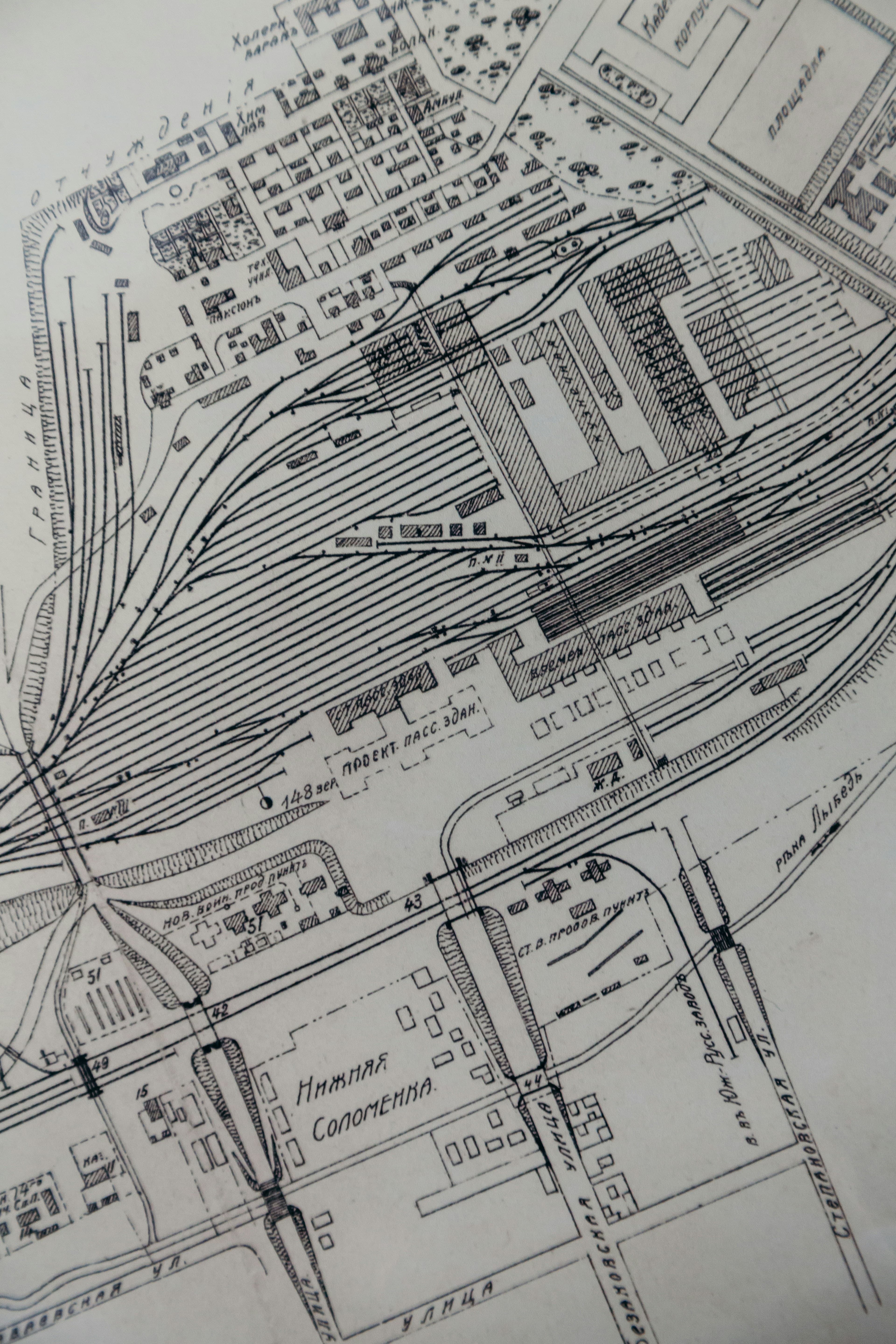
A site plan is a detailed drawing that shows how a specific property will be developed, including building locations and heights, parking and loading areas, access roads, landscaping, and signage. Local planning departments review site plans before issuing a building permit, and most jurisdictions require formal approval of the plan by a planning board or staff reviewer. Site plans are a crucial part of the approval process.
# How Site Plan Review Works
Site planning typically moves through three stages.
- Concept planning happens first--often before a developer commits to a site--and only broadly maps land uses and major road alignments.[1]
- Next, preliminary planning refines that concept into an illustrative site plan, showing how the development will actually look. The preliminary planning stage is usually when the local government and developer settle major issues like road width, housing type, and open space requirements.[1]
- Final planning produces the detailed construction drawings and formal site plan submitted for approval. What the final submissions must include is spelled out in local zoning ordinances.
- For example, it can require the plan to show the location and height of every building, the area devoted to parking and loading, all access roads, landscaping and screening plans, and any proposed signage.
All plan details are reviewed against a jurisdiction's specific standards for coordinating the proposed use with its surroundings.[^2] For non-residential or planned development projects, review is often handled by a dedicated staff of engineers, architects, and planners rather than a single building inspector.[^3]
# Why Site Plan Approval Matters
No building permit or certificate of occupancy can be issued without an approved plan of development, so regardless of whether the underlying zoning permits a use, a site plan review always must come first.[^2] Additionally, for non-single-family or planned development projects, this step is where a planning board can attach binding conditions on hours, buffering, traffic mitigation, and other site-specific details before construction starts.
Timelines vary widely by jurisdiction and project complexity, but multi-phase projects typically go through a full preliminary-and-final cycle for each phase rather than once for the whole development.[1] Reviewers look at how a project fits with surrounding uses and natural features surrounding the project, such as water or trees. As a result, a plan that ignores site context can get sent back for revisions even if if it complies on paper.[^2]
# Common Misconceptions
The biggest misconception about site plan review is that it is discretionary. Unlike a variance or special permit, a site plan review is very often not. Courts have held that site plan review boards can only act in a few defined ways on an application: deny for missing information, approve, or approve with conditions. As a result, the site plan review process typically cannot be used as a tool for shaping development in an open-ended, discretionary manner.[^4] That distinction matters because it affects what conditions a board can legally impose and how much a project can be changed at the review stage.
Not making this distinction can cause developers and officials alike to expect the wrong things from the process. Developers can, and do, spend time negotiating changes that aren't actually required. Opponents may also treat it as a second chance to block a project, when in reality, site plan review gives little to no room to change the project's substance.
# Related Terms
- Request for Proposal (RFP): the solicitation a city may issue before a site's development plan even exists
- Subdivision Plat: the separate process for dividing land into lots
- Planned Unit Development (PUD): a zoning designation that often triggers a more detailed site plan process
- Community Benefits Agreement (CBA)): sometimes negotiated alongside site plan approval for larger projects
- Variance: a discretionary zoning relief distinct from the largely ministerial site plan review, pending
# Frequently Asked Questions
# Is site plan review discretionary or ministerial?
It depends on the jurisdiction, but many local governments and courts treat site plan review as largely ministerial. This means that the reviewing body checks compliance with existing standards rather than exercising open-ended judgment. This differs from a variance or special permit, which does involve discretionary approval.
# How long does site plan approval take?
Timelines vary by jurisdiction and project size, ranging from a few weeks for administrative staff-level review to several months for full planning board review on larger or more complex projects. Multi-phase developments typically repeat the process for each phase.
# What's the difference between a preliminary and final site plan?
A preliminary site plan is a more detailed drawing used to work out major issues like road alignment, building placement, and housing mix with the local government. A final site plan contains the detailed construction drawings submitted for formal approval and is usually a refinement of the preliminary plan rather than a substantially different design.
# Does every project need site plan approval?
No, because requirements vary by jurisdiction and use type; many zoning codes exempt single-family homes and small additions from formal site plan review while requiring it for commercial, multifamily, industrial, or planned development projects.
# Footnotes
-
Adrienne Schmitz, ed., Residential Development Handbook, 3rd ed. (Washington, D.C.: Urban Land Institute), "Planning and Design Process." [^2]: Industrial Development Handbook (Washington, D.C.: Urban Land Institute), sample industrial zoning ordinance, "Site Plan Approval." [^3]: Anita Kramer, ed., Retail Development Handbook, 4th ed. (Washington, D.C.: Urban Land Institute), on planned development district review. [^4]: Citizen Planner Training Collaborative, "Site Plan Review," citing Prudential Insurance Co. of America v. Board of Appeals of Westwood, 23 Mass. App. Ct. 278, https://concordma.gov/DocumentCenter/View/41498/Citizen-Planner-Training-Collaborative-CPTC-Site-Plan-Review-Handout. ↩ ↩[2] ↩[3]